GRAPHING MOTION Video tutorial Graphs Video tutorial 1 Velocity Video tutorial 2 Displacement
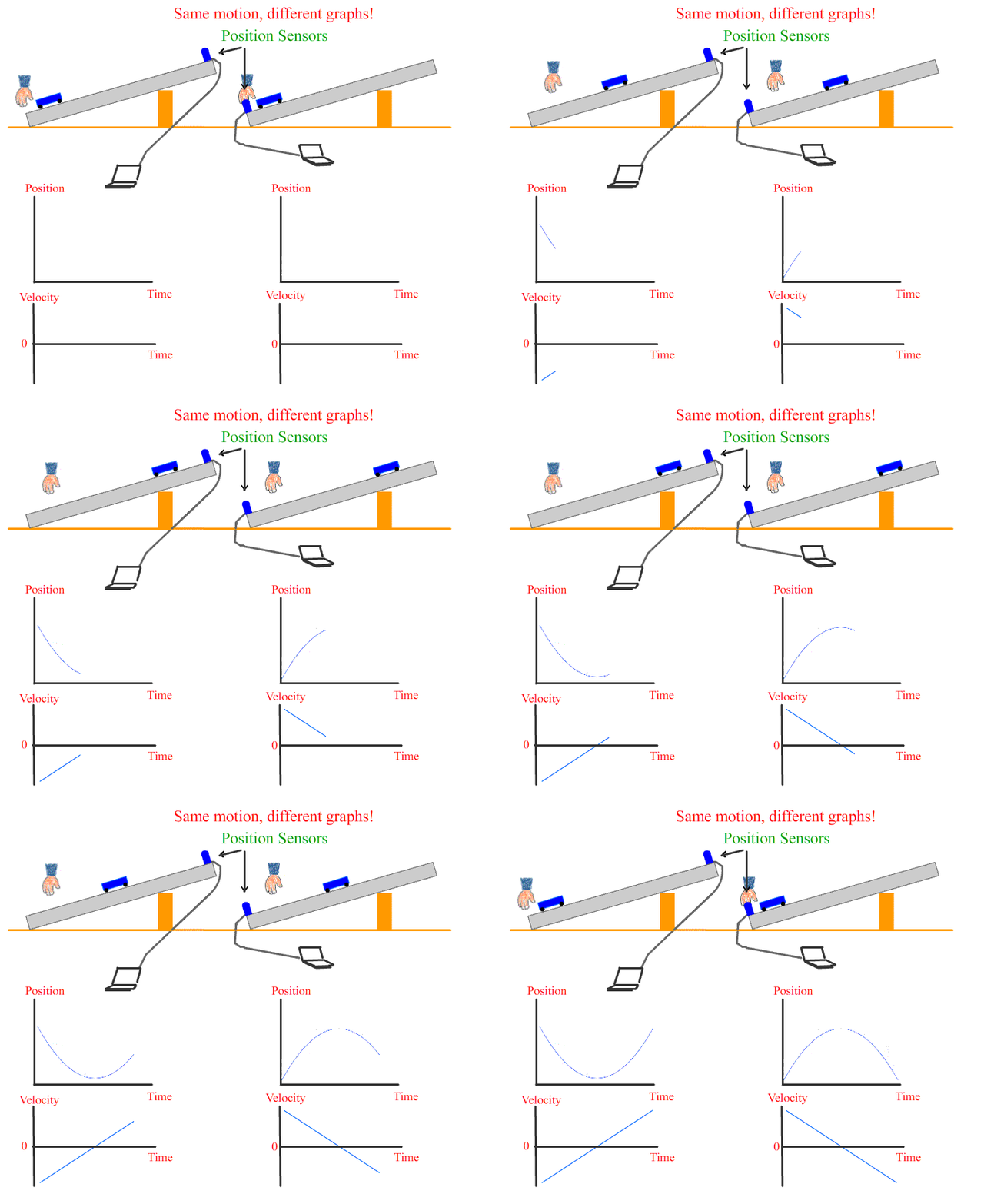
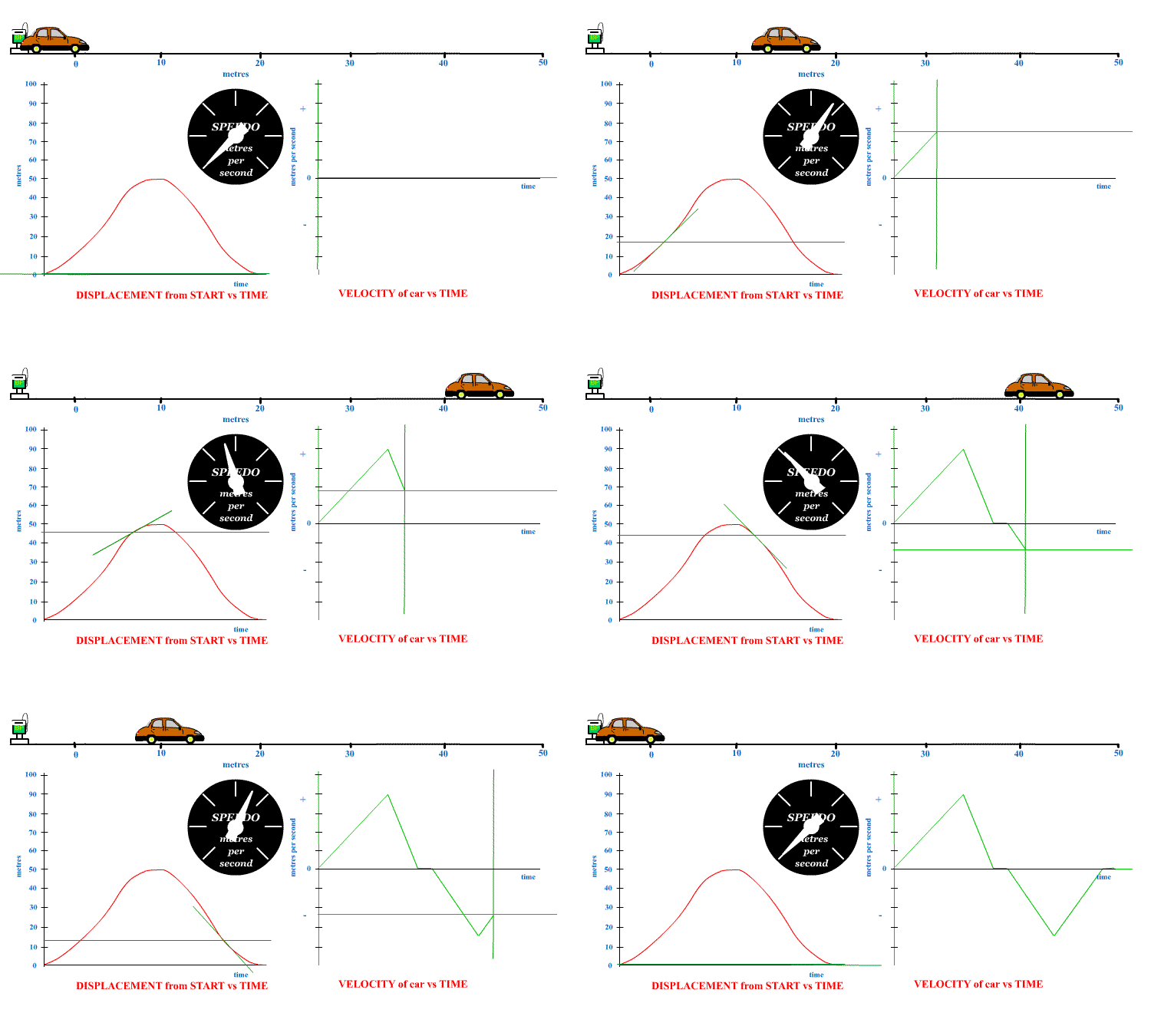
Consider the trollies freely moving up and down the ramp as in the animation above. The position detector creating graphs of position relative to the detectors and velocity. These graphs are parabolas for position ( change in position is displacement ). The trollies approach or get further from the sensor. Straight lines for velocity. The trollies actually stop at the top and speed up in the other direction after. The graphs are identical but inversions of each other because they are measured from different positions.
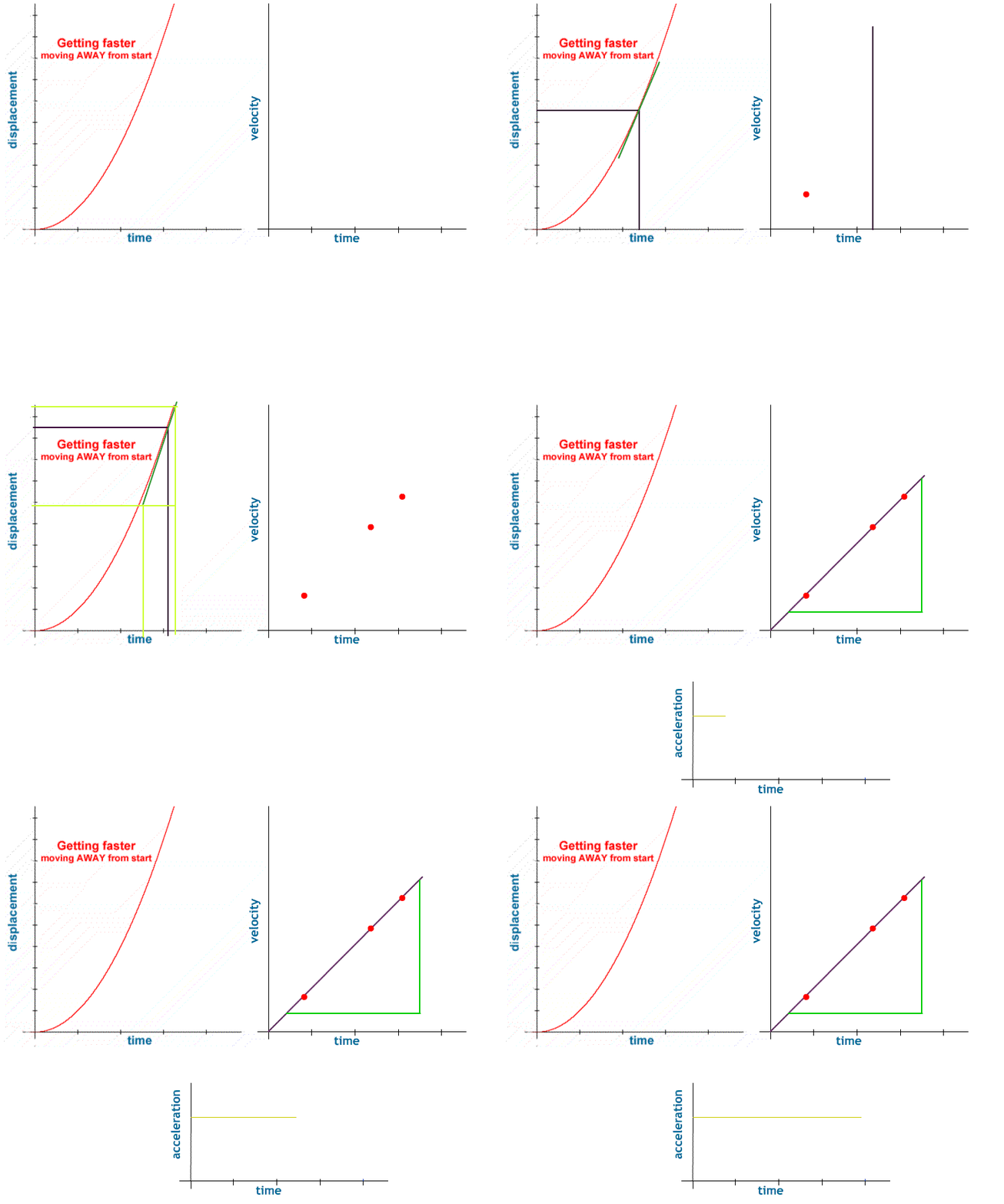
We shall consider something which is getting faster from some initial speed v0 ( or u ) and look at the displacement with time graph.
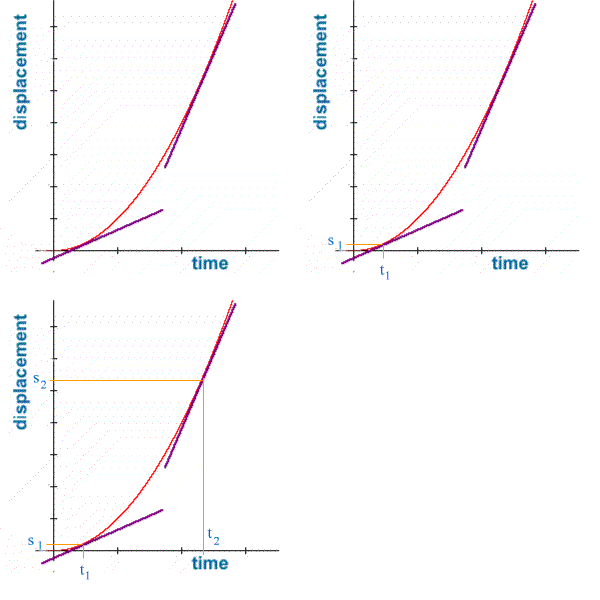
The graph shows increasing velocity because it gets steeper. In the same time intervals, it goes further as time progresses.
Two points are shown. At the moments of time, t1 and t2, the car has reached the two displacements s1 and s2 indicated on the vertical axis. ( For example, after starting at 0 ( the petrol station), at 3s it has travelled 20m to the right and at 5s it has travelled 80m to the right. ) The steepness of the graph is greater at the second point than it is at the first.
The steepness of the graph is the INSTANTANEOUS VELOCITY at those points. The steepness is literally the rate of change of displacement, s.
Steepness is measured by the slope or gradient of the tangent to the curve at that point .
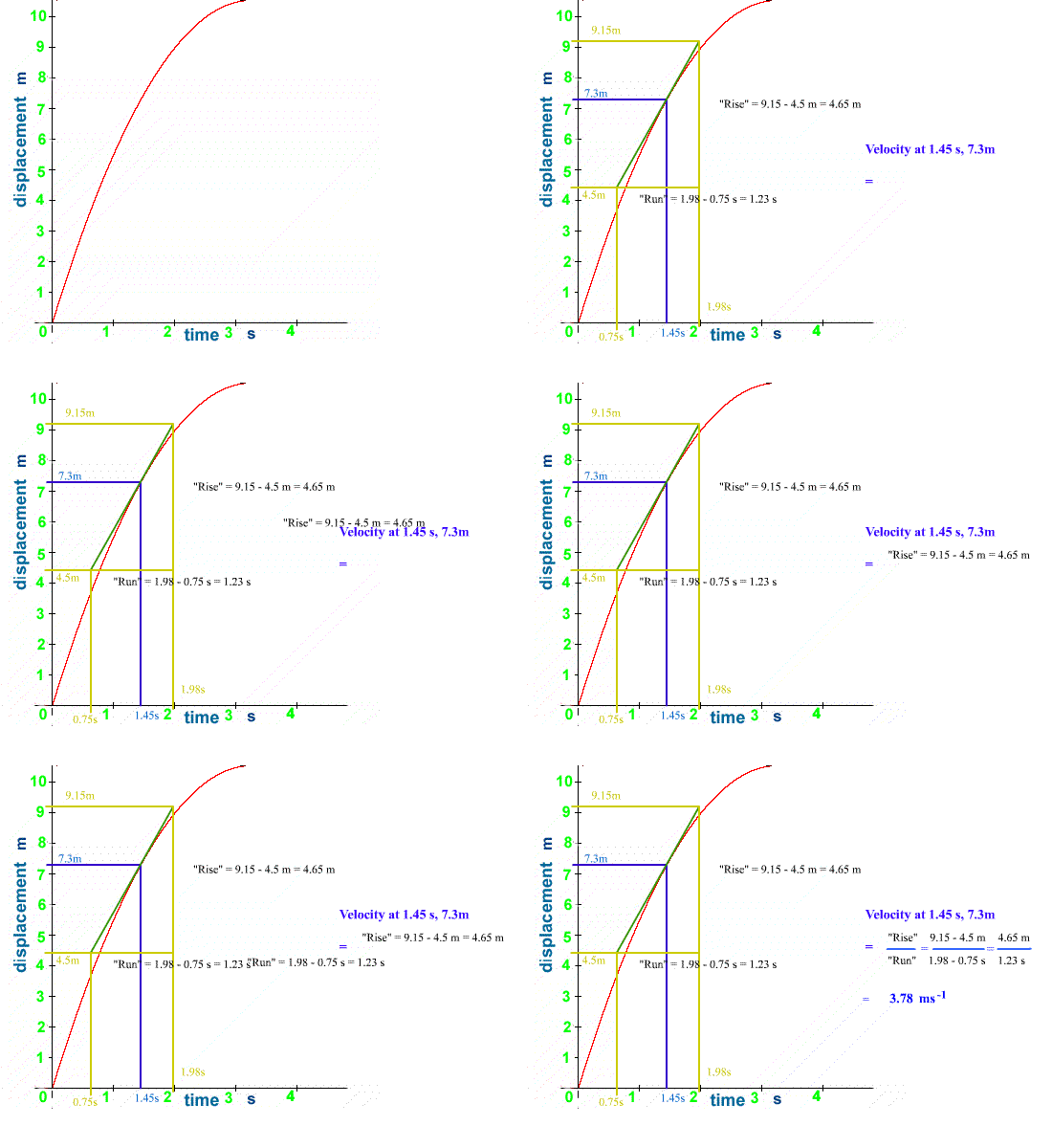
In the diagram above, the car reached 7.3m , 1.45s after departure.
Its velocity is then
v = slope of tangent at 1.45s = "rise" / "run" = 4.65 / 1.23 = 3.78 ms-1
We can now plot velocity ~ time graphs from the derived list of velocities at the moments of time
when we measured the slope. These will show changes in velocity, that is, accelerations.
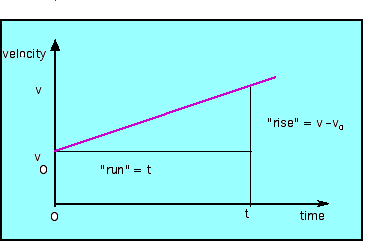
This graph shows an increasing velocity with time. If the velocity was decreasing it would slope the other way. The slope shows that we have an acceleration and the value of the slope is the acceleration.
a = Final velocity - initial velocity
( final -- initial = change = Δ)
time elapsed
= v - v0
= "rise" / "run"
t
acceleration , a = slope of v ~ t graph Note; many prefer to use "u" instead of "v0"
We often rewrite the equation above to the following form;
v = v0 + at
the first equation of motion in a straight line.
The AREA of the v ~ t graph is the displacement!
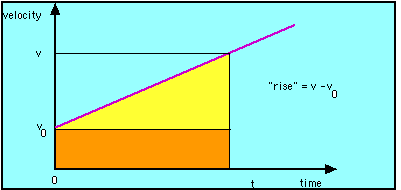
We can break the shape into a rectangle and a triangle.
The rectangle has an area = "base" . "height"
= v0.t
But this is the displacement travelled at a constant velocity for a time t !
Eg. A bike travelling at 10 ms-1 for 15 s travels 150m.
So the triangle also represents displacement, the extra displacement due to the acceleration!
total displacement = area under vel.~time graph
s = area rect + area triangle
= v0t + 1/2 . "base"."height"
= v0t + 1/2. t. ( v - v0 )
if we look at the equation for acceleration, we get
( v - v0 ) = at
so s = v0t + 1/2.at2
or s= 1/2.at2 + v0t
THIS IS A PARABOLA, a quadratic equation, and fits the parabola of the top animation.
This is the second equation of motion in a straight line.
A third equation can be obtained by substituting for t in the second.
t = ( v - v0 )
a
We get 2as = v2 - v02
The three equations allow us to calculate the time, displacement, velocities and acceleration from given written information without the use of graphs although all of these can be related back to the graphs.
Examples of problem solving using the equations
Eg. A bus starts from rest and accelerates at 2ms-2 for 10s, travels at constant speed for 30s and stops with an acceleration of 4ms-2. How far did the bus travel?
Soln.
The motion consists of three parts. Starting. Constant velocity. Stopping.
Each part is a separate motion in the straight line and must have the equations applied to them separately.
Starting ; v0 = 0 ms-1, s = ?, t = 10s, a = +2ms-2
Displacement travelled while starting, s1, is given by;
s = v0t + 1/2.at2
= 0 + 1/2.(+2).(10)2
= +100m = s1
Constant Motion ; We do not know how fast the bus is travelling during this part but it is the same as the motion at the end of the earlier part. We must first work this out.
Using v = v0 + at v0 = 0 ms-1, t = 10s, a = +2ms-2
= 0 + 2. 10 = 20 ms-1
This is the velocity of the bus for the time of constant motion.
The displacement, s2, in this time is then , from the second equation;
s = v0t + 1/2.at2 but v0 = 20 ms-1, t = 30 s, a = 0
= 20.30 + 0 m = +600 m = s2
Slowing Down ; The motion starts at 20 ms-1 but stops with an acceleration of 4ms-2 . For this motion, then ; v0 = 20 ms-1, a = - 4ms-2 , v = 0 ms-1 !
Note the negative acceleration.
Using the third equation, 2as = v2- v02
2. (- 4).s = 0 - ( +20 )2
- 8 s = - 400
Thus s = + 50 m = s3
The total displacement is then +100m + 600m +
50m = +750m
Link to moving vertically
Link to Quadratic Equations Tutorial