Magnetic phenomena are generally associated with iron and steel. In
reality, magnetism is an electric phenomenon.
Any moving charge is a magnet. "Ferromagnetism"
is one of 3 forms of magnets atoms can take- the other two being
diamagnetism and paramagnetism. Atoms are magnetic because their
electrons ( and nuclei ) are moving ( spinning ) charges. Iron simply has
a strong total magnetic effect when all the electrons' individual effects
are added.
However, as Spec Rel is not easy to apply to electrostatics, we
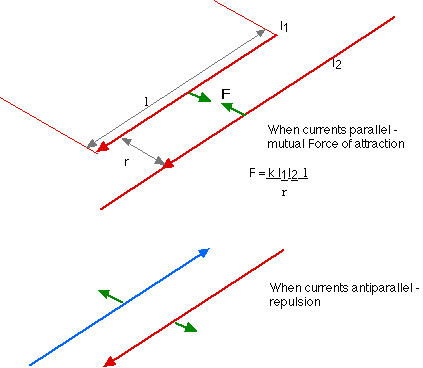
start by observing that two parallel "current carrying wires" attract when
the currents have the same direction yet repel when when antiparallel.
F = 2x10⁻⁷ I1I2l / r
We could start with other current type magnets attracting or repelling. The key issue is that currents attract and repel - the motor principle.
What is startling is that while the forces are measured in newtons (N) same as always, magnetism is not strictly newtonian as we shall see when we analyse the direction of the forces once we look at the fields.
The equation above is the base level reason why electric motors work,
wires attracting and repelling wires.