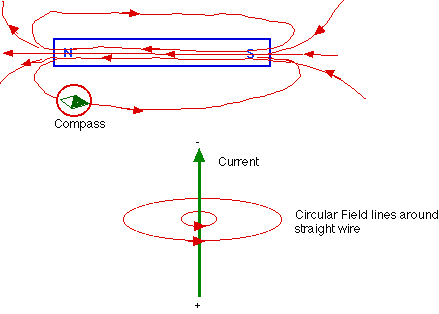
These are the fields we are most familiar with. Most of us have wandered around the house with a compass "getting lost". Because of our experience with compasses, we define the direction of a B field as the direction a compass N pole points. ( As "like" poles repel, ironically, the North Pole of Earth has "South" polarity.)
"B", the strength of a magnetic field has many names depending on which text you use and how much credibility you give history! This value, B, is called the Magnetic Flux Density BUT it is also historically called "the Magnetic Induction" just to confuse you with a different topic.
(The term Magnetic Field Strength is associated with a derived value, "H" which takes into account the properties of materials. This term derives from when magnetic poles like charges were thought to exist. Some theoretical models of particles predict magnetic monopoles but none have ever been discovered.) The different sources do agree that B is the correct abbreviation.
Unit of B is the "tesla",T, in SI units - old units include the "gauss" and the "oersted". This is named after Nikola Tesla, a founder of the AC generation system used today across the world.
In the diagram above, the direction a compass needle points near a "conventional" current ( flowing from + to - terminals ) is closed WITH NO START OR FINISH. This is clearly different from electrostatics and gravity where field lines start and finish at objects. Magnetism seems to have no individual "North poles"and "South poles", a problem for many subnuclear physicists.This is true even in metal bar magnets as well as current magnets.
Predicting the direction of the field line now is tricky - no problems outside a "bar magnet" with its ( nonexistant ) poles where the lines look and behave like electrostatics but a real problem inside the metal and for a current carrying wire. We have to resort to memory aids
- USING THE RIGHT HAND.
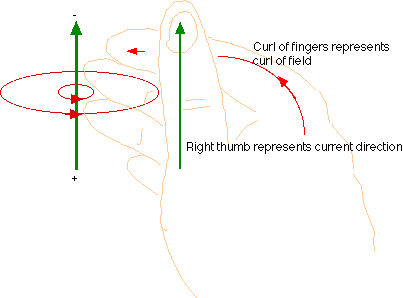
Here the thumb sticking up represents the current, and the curl of the fingers represents the field line and direction.
EVALUATING "B"
To give the field a value, we once again note that forces exist between the wires so the field strength can be given in terms of force on a small test magnet.
For convenience, we select a small straight piece of wire of known length and current. I shall call it Itest because it must be small ( so small you can scarcely see it - get it? ). Arrange the wire so you get the LARGEST force on it. This is different from gravity and electrostatics where the orientation of the test object is irrelevant.
Similarly to the two other fields, DEFINE B as a force divided by by the test magnet values of current and length.
B = Fmax / Itest l the units of tesla are NA-1m-1
The direction of B is NOT the direction of the force however - this is radically different from electrostatics and gravity - this is where we start being non newtonian!
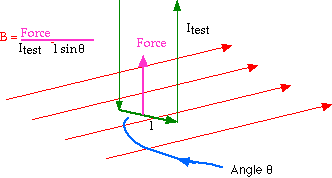
The largest force occurs when the current is at rt angles to B - and
we find that B and F are also perpendicular !!!!
OH WOW!!!! Newton would not be a happy person if he knew.
When we compensate for angles, we must insert sinθ. So rearranging the definition
F = IlBsinθ for the SIZE of F on a current - and some kind of memory system for the direction!!
DIFFERENT TEACHERS, DIFFERENT SCHOOLS use
different memory tricks at this point. One book will refer to "The right hand
Palm Rule", another to "Fleming's Left Hand Rule" - and others. I personally
use a variation on "vector products" - the "Right Hand Screw Rule". It sounds
suitably rude.
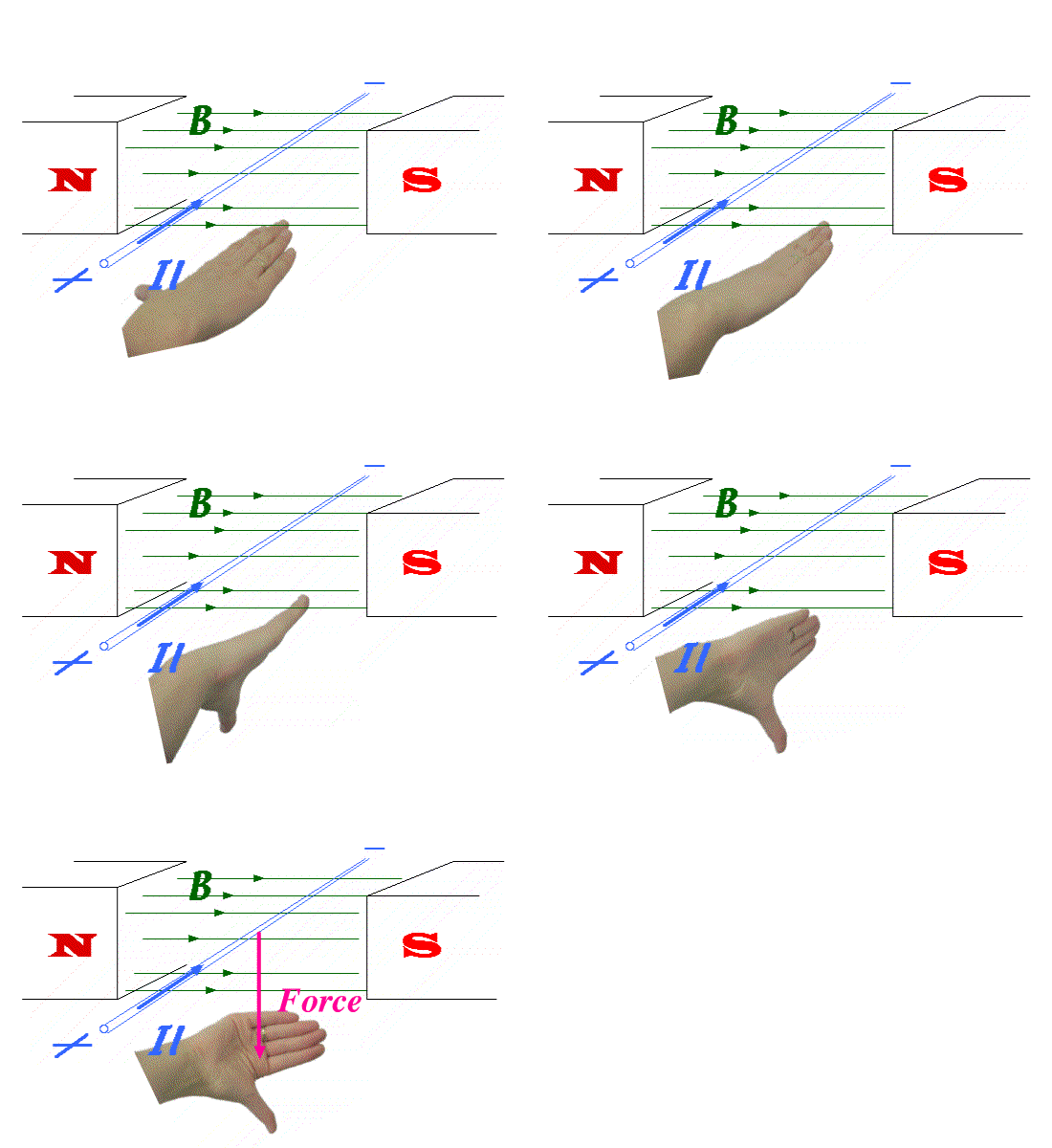
The trick is to look at the equation as
(DO remember to use your right hand and conventional current - if you insist on electron flow, you may use your left hand. )
It doesn't matter a damn which variant you use as long as it works for
you.
( This is an example of a "vector product" or "cross product" which is a generalised type of vector rule. Click here for more.)
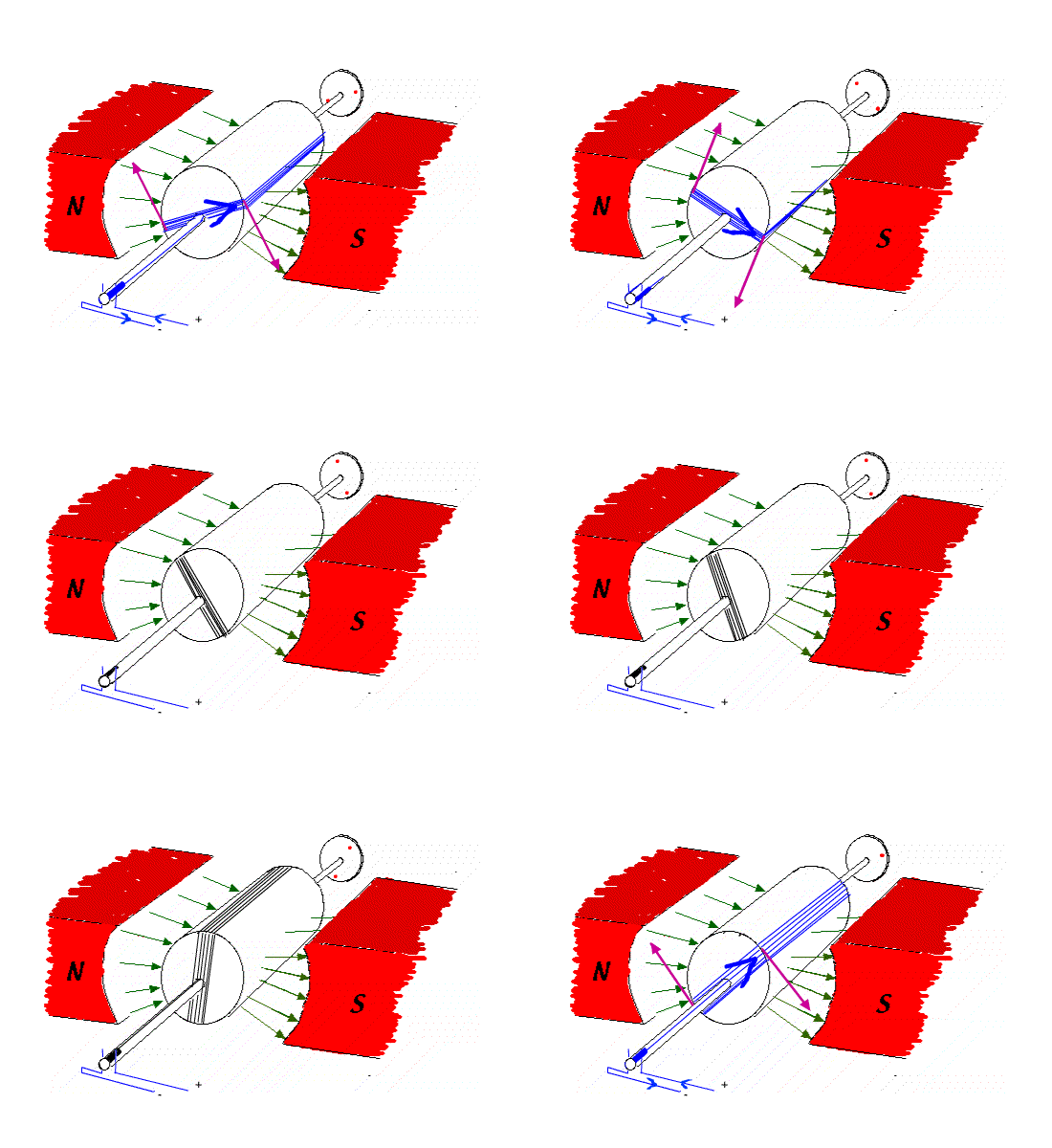
The Electric Motor can be explained by this
force law.
Motors - electrical energy
IN, mechanical energy OUT
Each side of the rectangle has the force F= IlB acting upon it, one side UP, the other side DOWN. The system will rotate until the wires are at top and bottom. This is stable and rotation will cease. So to continue rotation, we provide a simple automatic switch reversing the current. This automatic switch is the COMMUTATOR, bits of copper plate stuck to each side of the axle and turning with it. Brushes rubbing the plates bring the current into the rectangle.
The motor can also be thought of as rectangle with current making it a magnet which is rotates in an attempt to align its field with the external field. Each time it approaches this, the current is reversed causing further rotation.
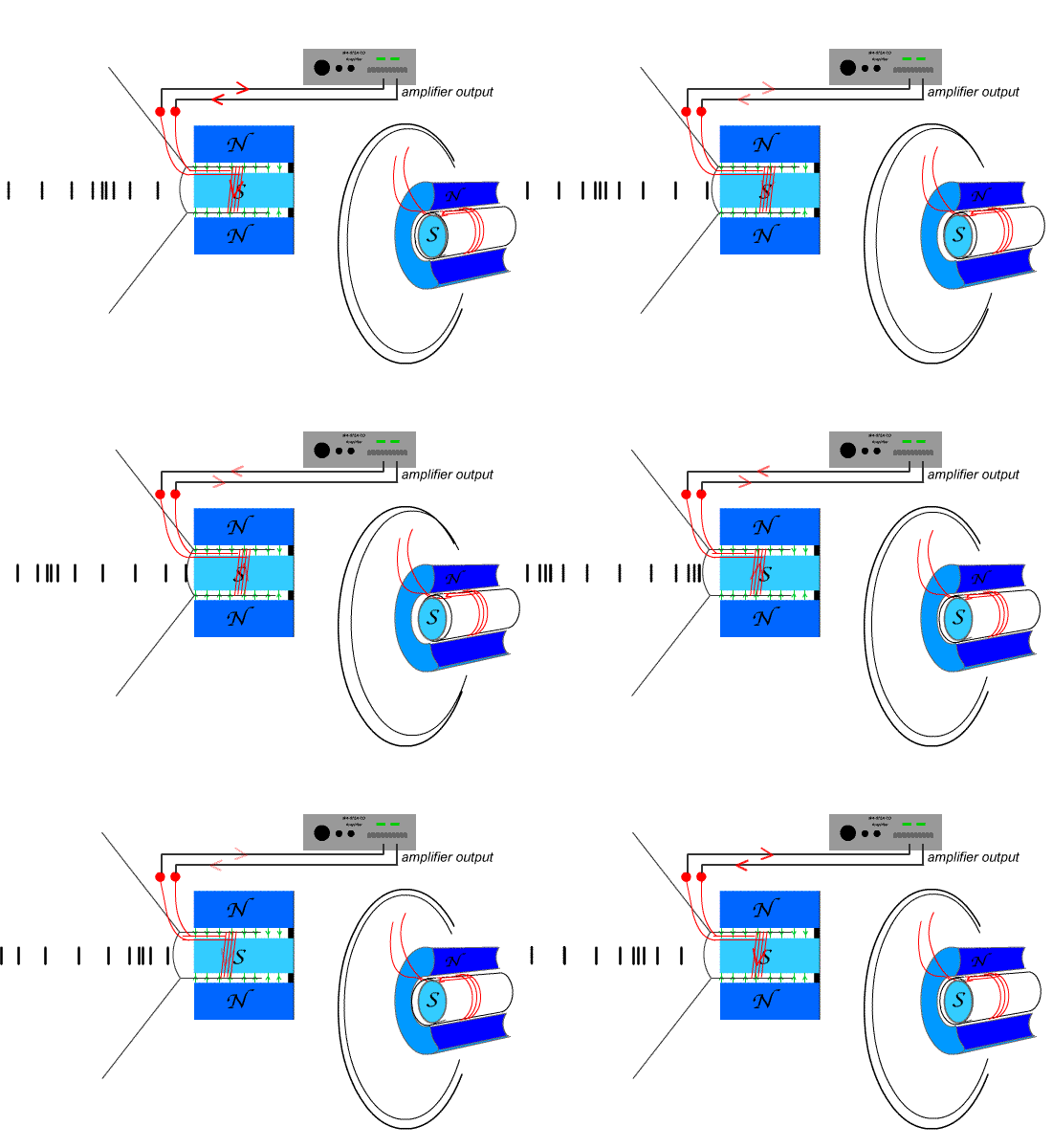
The standard loudspeaker is also a magnetic motor but it is not a rotating device. The moving component is a cylinder ( with the loudspeaker cone attached ) inserted in a very powerful radial magnetic field. This field is created by a central pole surrounded by the opposite pole. The cylinder fits in the slot between the poles. Wires are wrapped around the cylinder, so an alternating current from an amplifier into the wires is then subjected to powerful magnetic forces ( F = IlB and the RHS rule for direction). These forces are along the axis of the cylinder making it move back and forth in proportion to the current.
The cone then pumps the air creating sound.