Stop right now and make a list of characteristics most metals share.
* * * * * * * * * * * * * * * * * * * * * * * * * * * * * * * * * * * * * * * * * * * * * * *
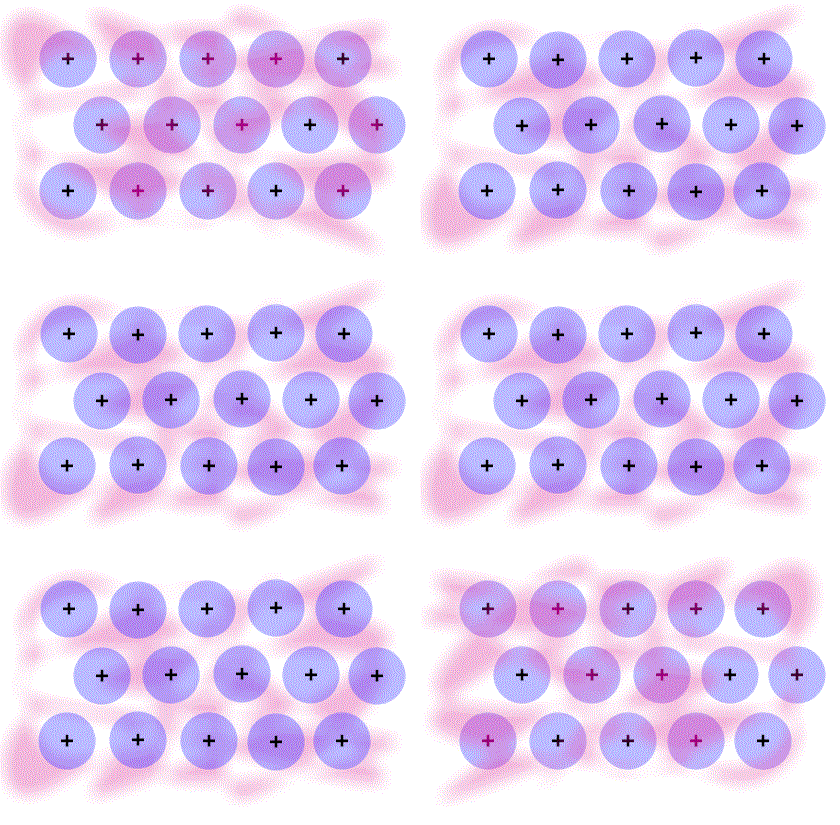
Having made your list, think back to Democritus and his copper foil. You have lots and lots of copper atoms all lined up in nice, neat rows and columns. Perhaps think of a uniformly sized and spaced collection of islands. The islands represent the copper atoms, the sea between them represents the valence electrons that have been donated to the ‘electron sea’. Each copper atom has released its valence electrons that are now free to roam about the whole. It is the negative electrons that hold the now positively charged copper particles together. I can’t call them copper atoms at this point. You will recall that atoms are, by definition, uncharged. When the copper particles release their valence electrons they become charged - they now have more protons than electrons and have acquired a net positive charge. Atomic-sized particles with a charge are called ions. Atomic-sized particles with a positive charge in particular are called cations.
How does this model of metallic bonding tie into your list of characteristics? (You do have your list, don’t you?)
Does your list include:
Next Page: Ions