Liquid Crystal Displays
Light can be polarized and this property is used in one class of popular flat panel displays. "Liquid crystals" cover a range of complex molecules with properties intermediate between solids and liquids. They are closer to liquids than solids in that little heat is necessary to convert them to true liquids. Their essential property is that they tend to hold orientations and these can be manipulated by grooved plates, electric fields, magnetic fields and other means.
Most of the liquid crystals are rod shaped and this property allows them to polarise light ( see web page on polarization ). Continuous rods or wires, if fine enough and parallel, will act as a polariser for light . ( The most common is "Polaroid Filter" which is an artificial dichroic material.)
Liquid crystals used in displays are in the "nematic" phase - they have a definite pattern and the most common of these used are "twisted nematic". When placed between a pair of mutually perpendicular grooved glass plates they will be locked in a twist of 900 from parallel to one set of grooves to parallel to the other set. A small electric field can then either untwist them or - depending on type or field direction - make them parallel end to end!
Light's polarization follows the twist of the liquid crystal. Normally the polarisation will change through 900 but if the molecules are untwisted or straightened, the light retains its original plane and comes into conflict with the second polariser!
Simple calculator displays rely on the "untwist" type. They use an aluminium mirror behind, a polarizer, two glass plates with transparent electrodes, liquid crystal between , another polarizer at right angles and a small voltage! Light coming from the mirror behind is immediately polarized. It follows the twist and passes through the second polarizer. If a voltage is applied, it untwists leaving the light with the wrong polarization. It fails to get through and the area is then black.
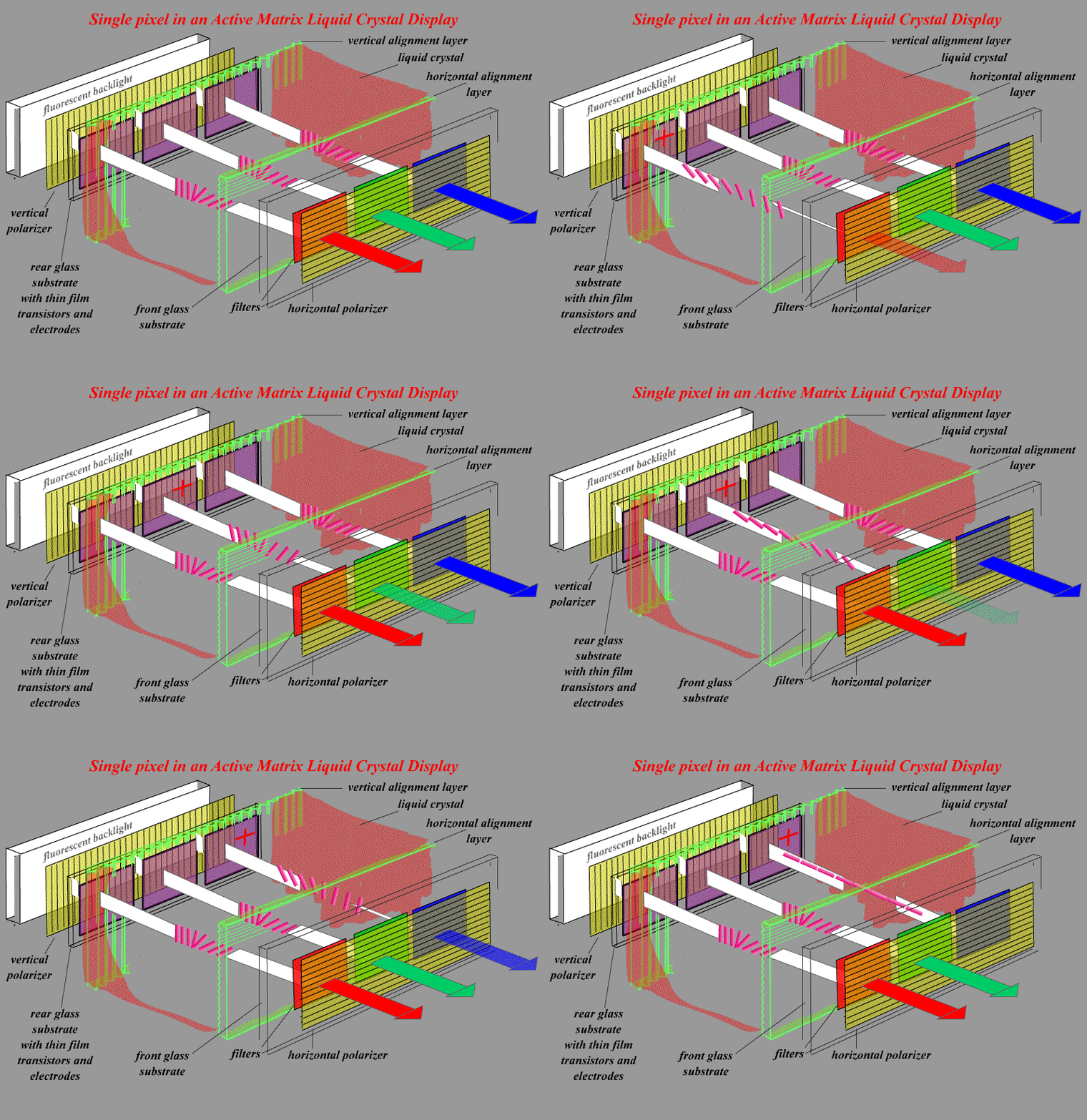
Colour LCDs used in TVs and computer monitors rely on the second!
The latest and best monitors "Active Matrix screens", have transistors attached to each small display pixel for speed and quality of colour and greyness.
Further reading; "Howstuffworks"
http://www.entertainmentcenterspot.com/science-behind-lcd-tv