topics                            photonics index

The Diode


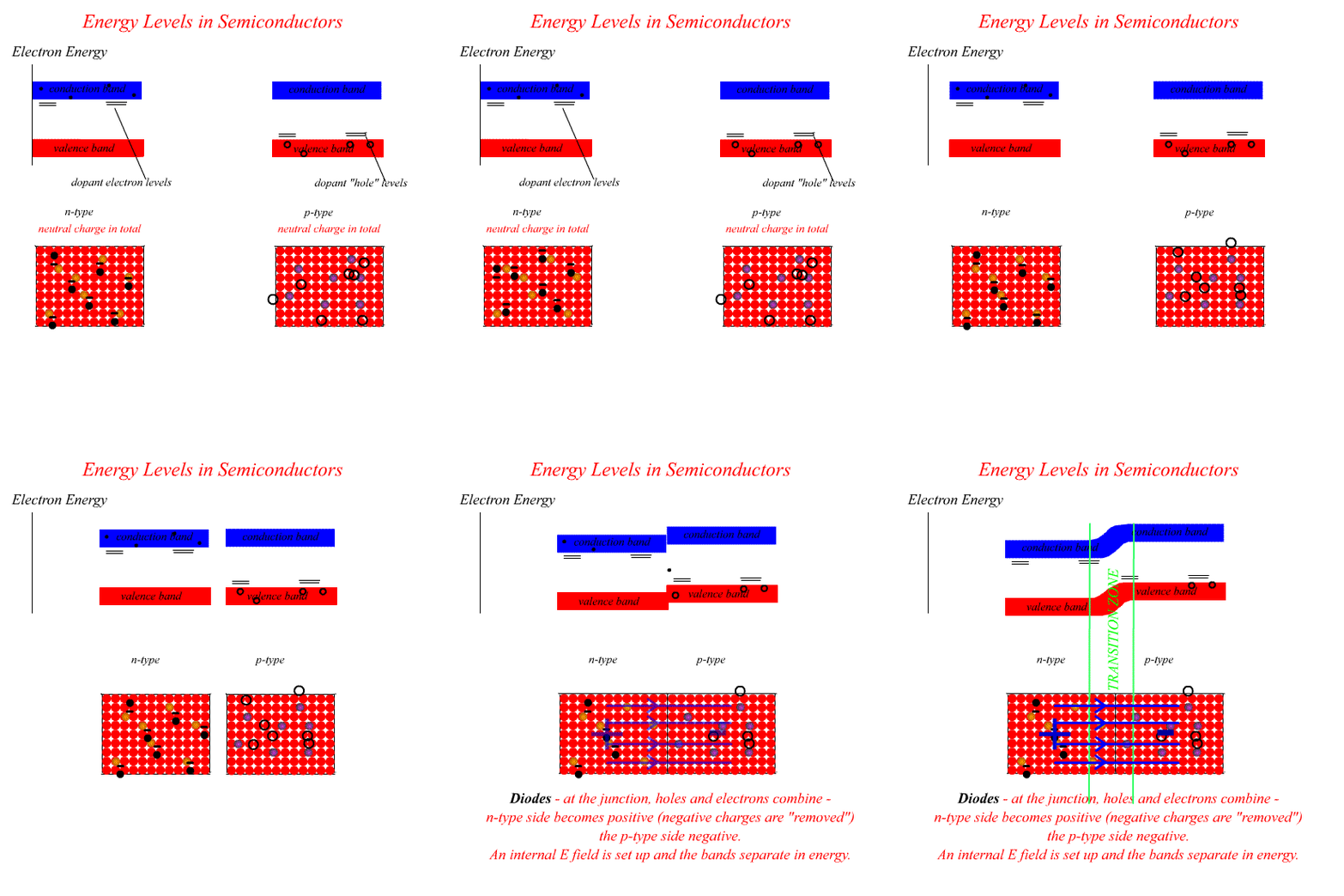
The junction diode forms the basis of LEDs, "Solar Cells" - photovoltaic cells, photodiodes, semiconductor lasers, some ionising radiation detectors  and Charge-Coupled Devices. It is a junction of n-type and p-type semiconductors.

The diode can conduct only in one direction but the properties of conduction can be modified by light, heat and ionising radiation.

HEAT can raise the energy of electrons so they are then able to cross from n to p.
LIGHT can do the same via the photoelectric effect and is commonly used in Charge Couple Devices, Photodiodes etc to promote electrons into the Conduction Band.

When n-type and p-type are joined at the atomic level, at the boundary of the two types electrons merge into the holes. The electrons in the Conduction Band of the n-type crystal diffuse into the Conduction Band of the p-type and fall into the Valence Band holes annihilating them. Likewise holes diffuse over to the other side Valence Band providing opportunities for electrons to drop down into them.

This leaves an imbalance of charge further away from the junction. The n-type crystal becomes positive as electrons are removed by merging while the p-type becomes negative - the negative ions become isolated as the "holes" merge. As a result, an electric field is set across the junction up stopping further charge merge. An energy difference is set up across the junction. ( Obviously - as an electric field exists! ) The electric field is directed from the n-type towards the p-type through the junction.


Biasing the Diode