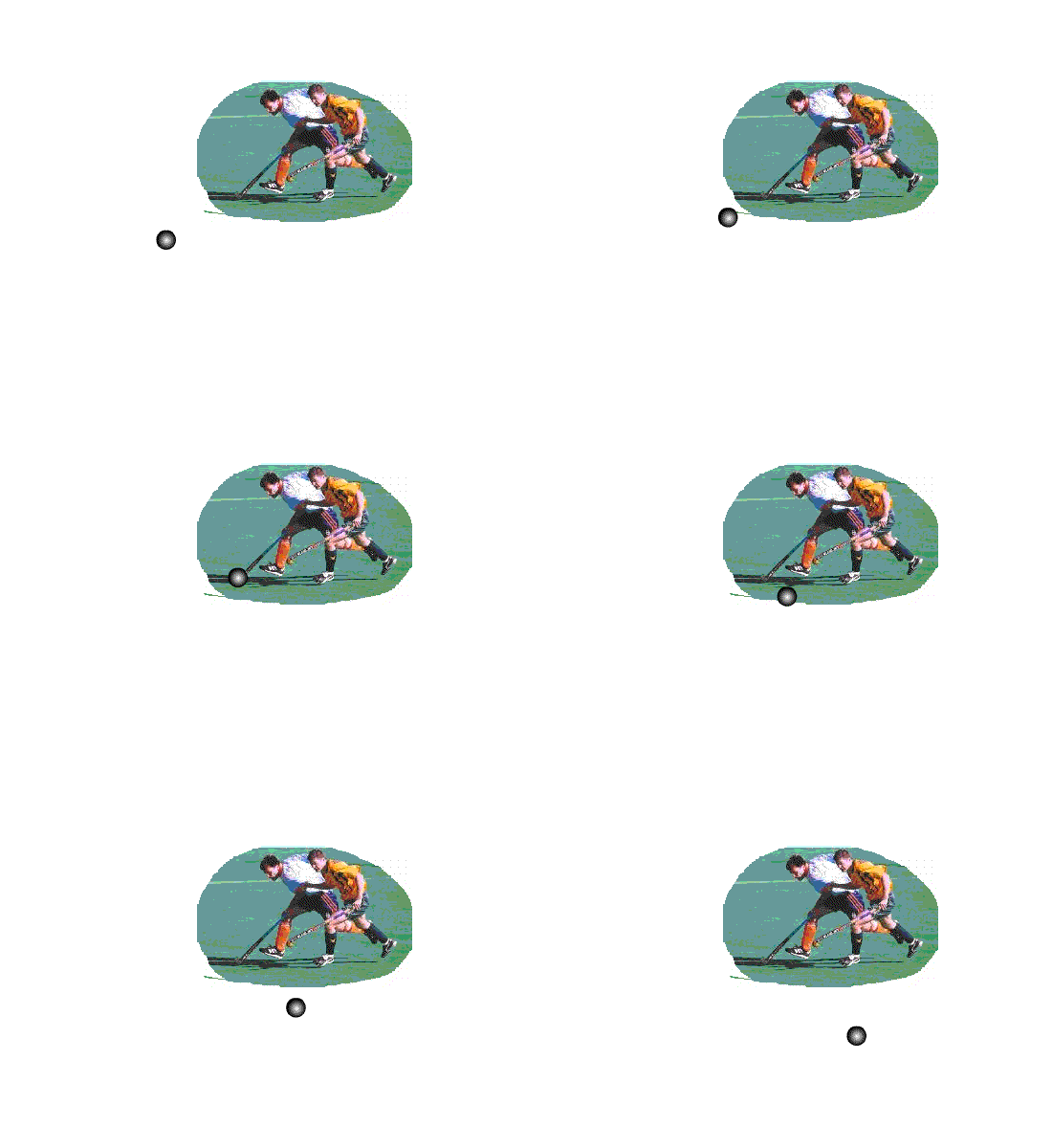
When cars/bikes/persons/skiers turn a corner they are all changing their motion if not their speed.
The direction of travel changes.
They are accelerating - and subject to an unbalanced force.
Newton's Second Law applies. Acceleration takes a broader meaning.
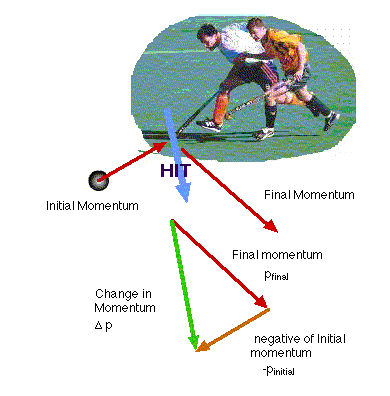
Consider the ball approaching the hockey stick and being hit into a new direction. The hit takes a certain time, Δt.
When the ball leaves the hockey stick, it has a new direction and possibly a new speed ( then again, maybe not! ).
The CHANGE IN MOMENTUM Δp, is the crucial thing as usual!
Remember that
Inital momentum pinitial plus (+)
the Change
Δp gives (=) the Final momentum
pfinal
( Ball comes, hit it , gives final momentum )
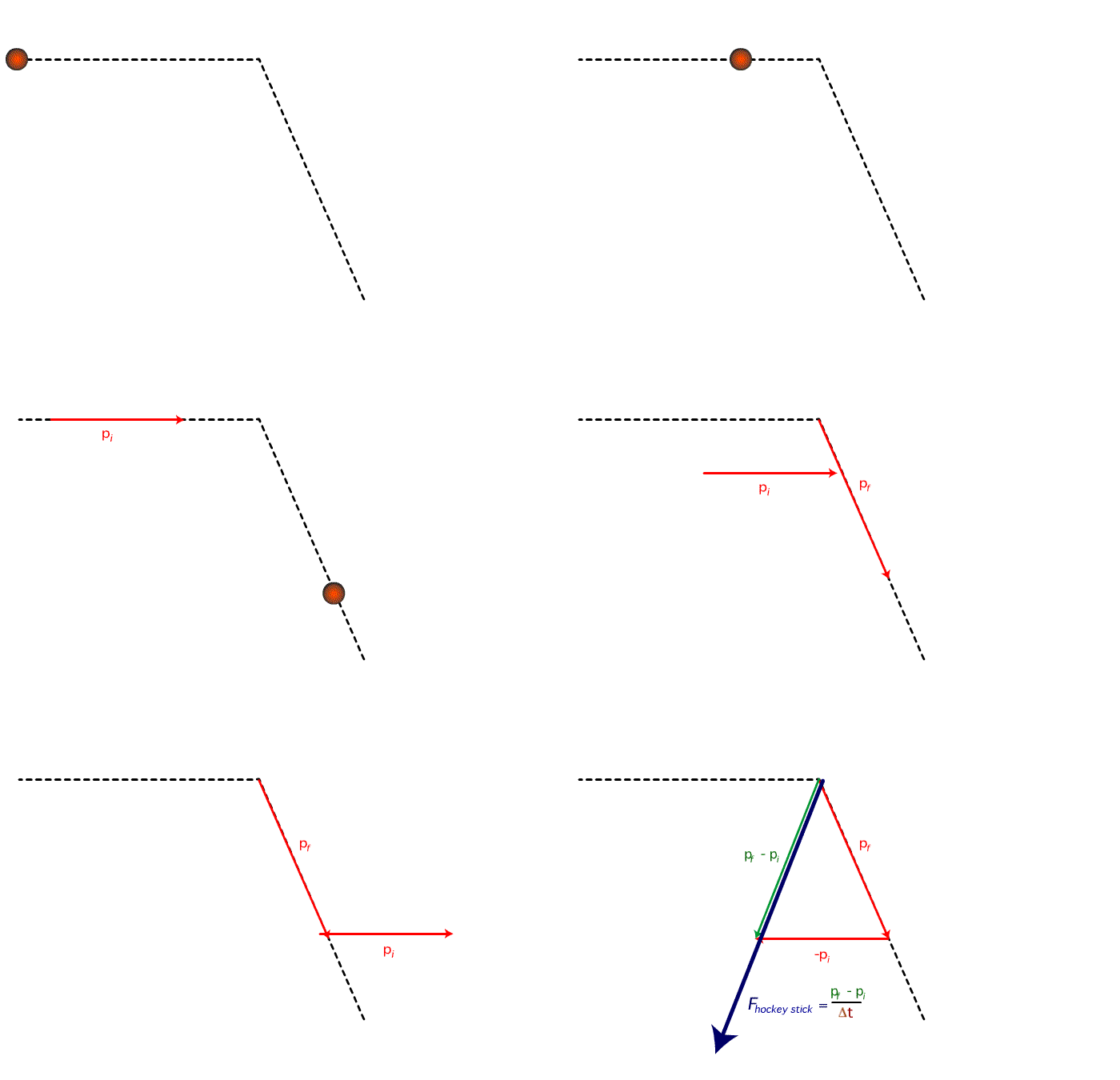
Thus Change in Momentum = Final momentum - Initial momentum
Δp = pfinal - pinitial
We must do a vector subtraction.
Reverse the direction of the Initial momentum to give the negative and then do the geometry ( cos rule etc ) needed.
The change in momentum must have
the same direction as the hit the unbalanced force because
Funbal = Δp
/ Δt
Notice the direction of the force by the hockey stick ( the unbalanced force on the ball ) ! It agrees with the direction of the whack the stick gave on the ball ( as it should ! ) and the change in momentum.
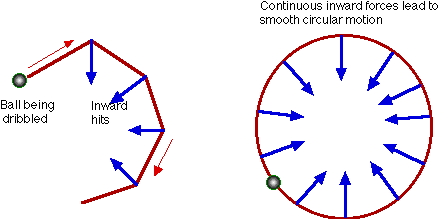
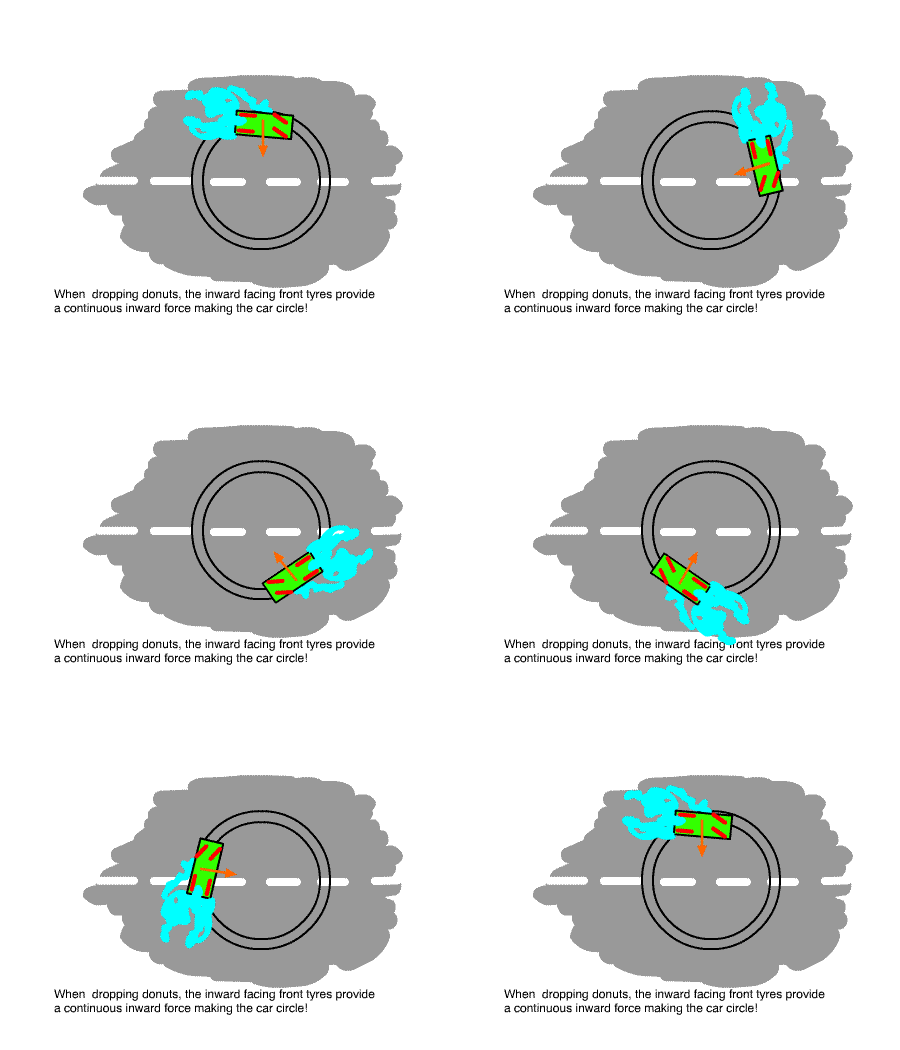
If we now "dribble" the ball around in a circle - we need to continuously
provide forces like the above hit to the ball to make it follow the circular
direction. The taps on the ball will always be INWARDS towards the
centre of the circle we are creating.
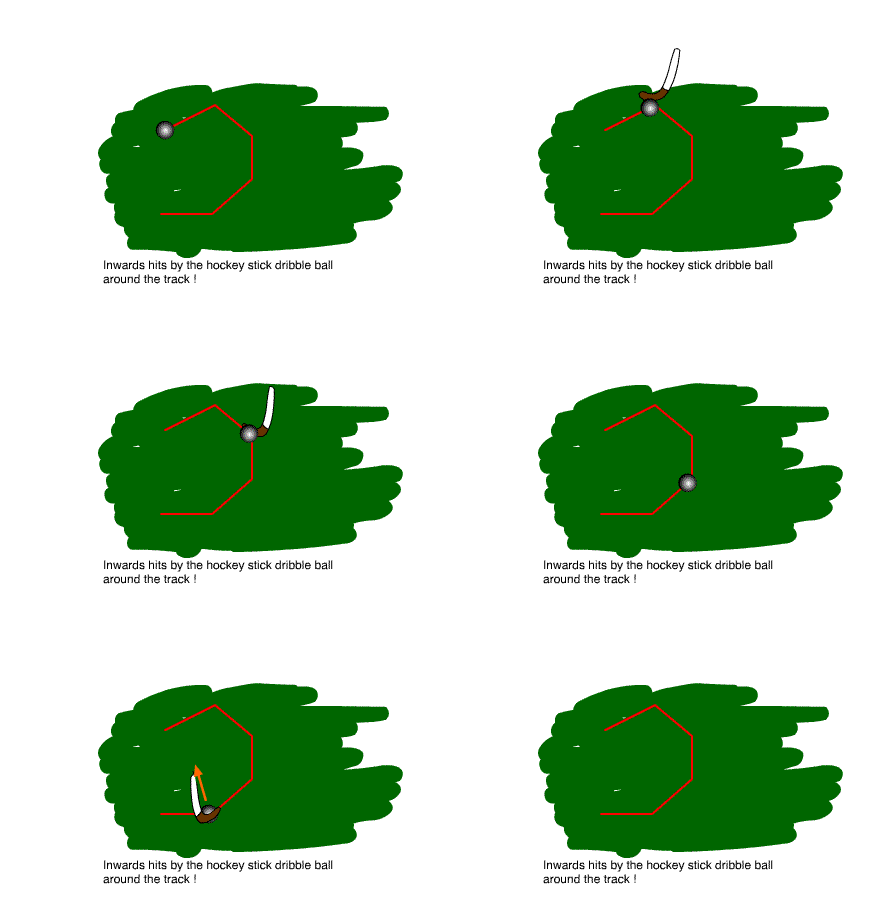
To make something go in a smooth
circle, the inward force must be continous.
Exercise:
Identify the actions you need to take to go around a corner if you are
rollerblading
skateboarding
flying
playing hockey
riding a bike
skiing ( water or snow )
In all these activities you will need to create a new, not cancelled, force inwards on you to turn yourself.
Regardless of cause of the force, it is given
the name CENTRIPETAL FORCE meaning "towards circle centre".
When we study the change in momentum through geometry, we find that
if the circle created has radius r, and speed of v, with a mass of m
then UNBALANCED FORCE causing all this has size
Funbal = mv2
r
and the acceleration felt will be a
= v2 / r
***
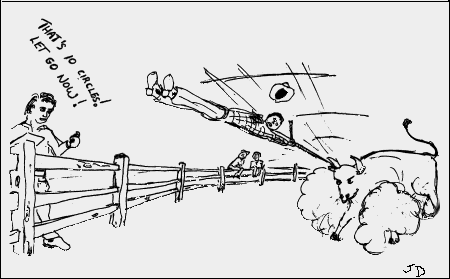
Your perception when turning a corner
is that you will be "thrown outwards" , that some mysterious force wants
you out of the circle. Simply, you are responding to your initial
momentum continuing you on your original direction.
This nonexistent force is often quoted as the "centrifugal force"
even by top physicists. In the Newtonian world - thems wrong.
These nonexistent forces created by accelerating frames of reference are called fictitious or pseudo forces. On the Earth, the high and low cells of the weather rotate due to the "fictitious" force called the Coriolis Force caused by the Earth being a sphere and rotating. Differences in velocities and accelerations lead to differences in ground speeds and hence rotations.