X-RAYS topics
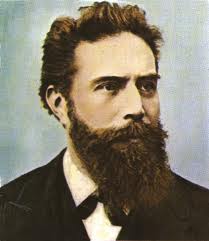
Discovered by Roentgen in 1895, this is one of those discoveries that has immediate
application. Roentgen did not claim a patent but immediately took his discovery
into medicine where it had instant acclaim.
The significance is in that the production of X-Rays can only be explained through the use of photons.
The basic equipment had been around for a long time - an evacuated tube with high voltage provided by an Induction Coil. Thomson, Faraday, Crookes and others could just as well found them much earlier. What set Roentgen apart was his observation of distant effects from the tube when working literally in the dark and following it up.
X Rays are created by bashing high kinetic energy electrons into a positive target preferably made of heavy metal, usually tungsten. Old cathode ray TV tubes and computer monitors produced X Rays as electrons are accelerated to a halt in the glass.
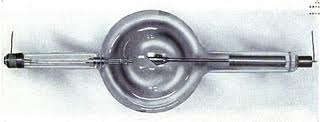 old and new design X Ray tubes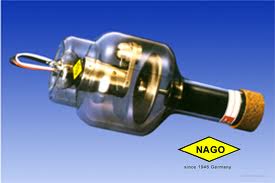
The first X Ray photo - Roentgen's wife's hand 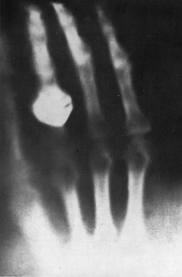
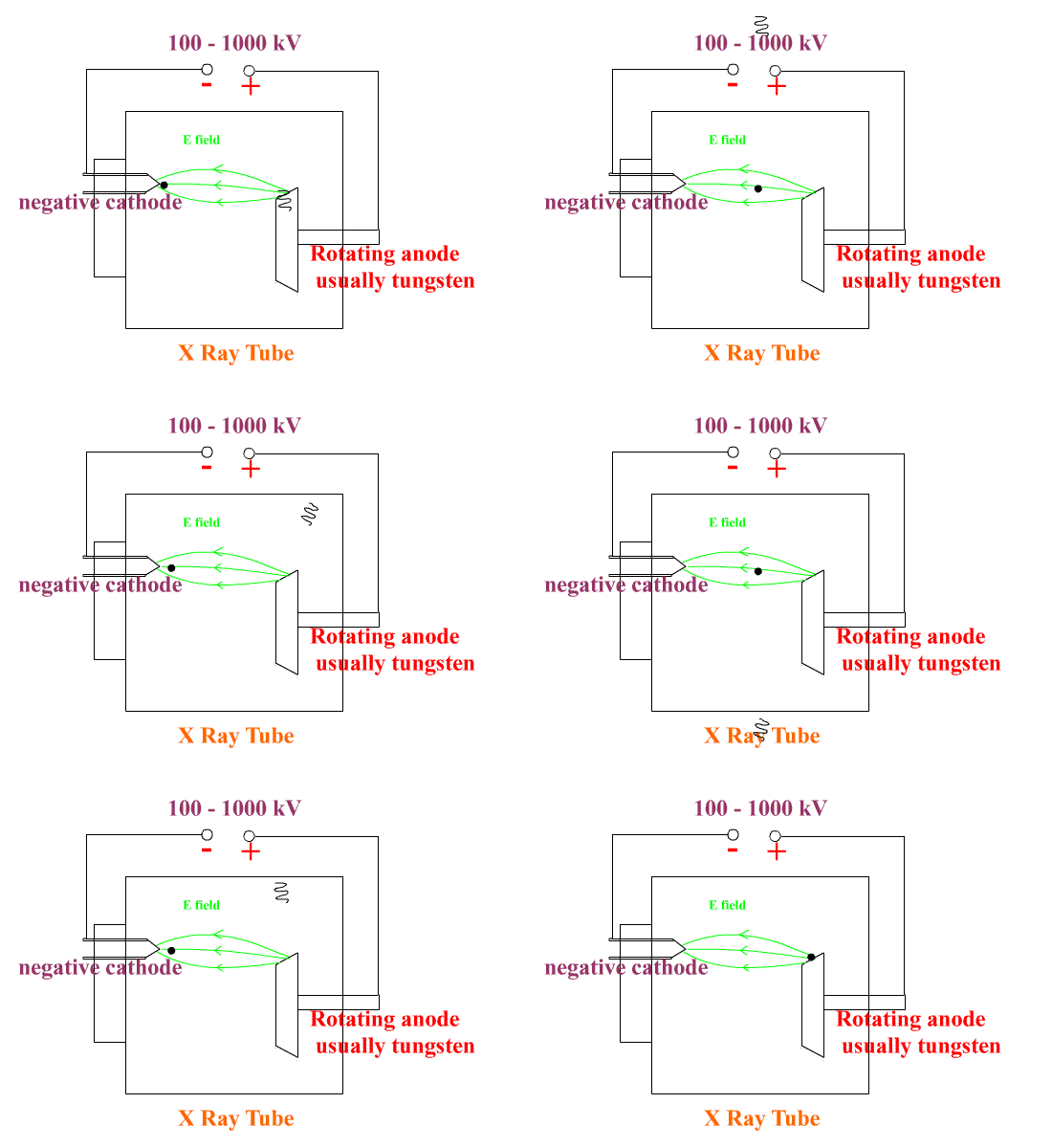
The electrons interact two basic ways, either with electrons in the target atoms, or with the nucleii of target atoms.
Electrons pound inner atomic electrons entirely from the atom leaving vacancies in the shells. Outer electrons then cascade into the atom to fill the vacancies. In so doing they lose potential energy and release photons corresponding to the energy changes. These photons have exact energies based on the nuclear atomic number and coresponding electron energy levels.
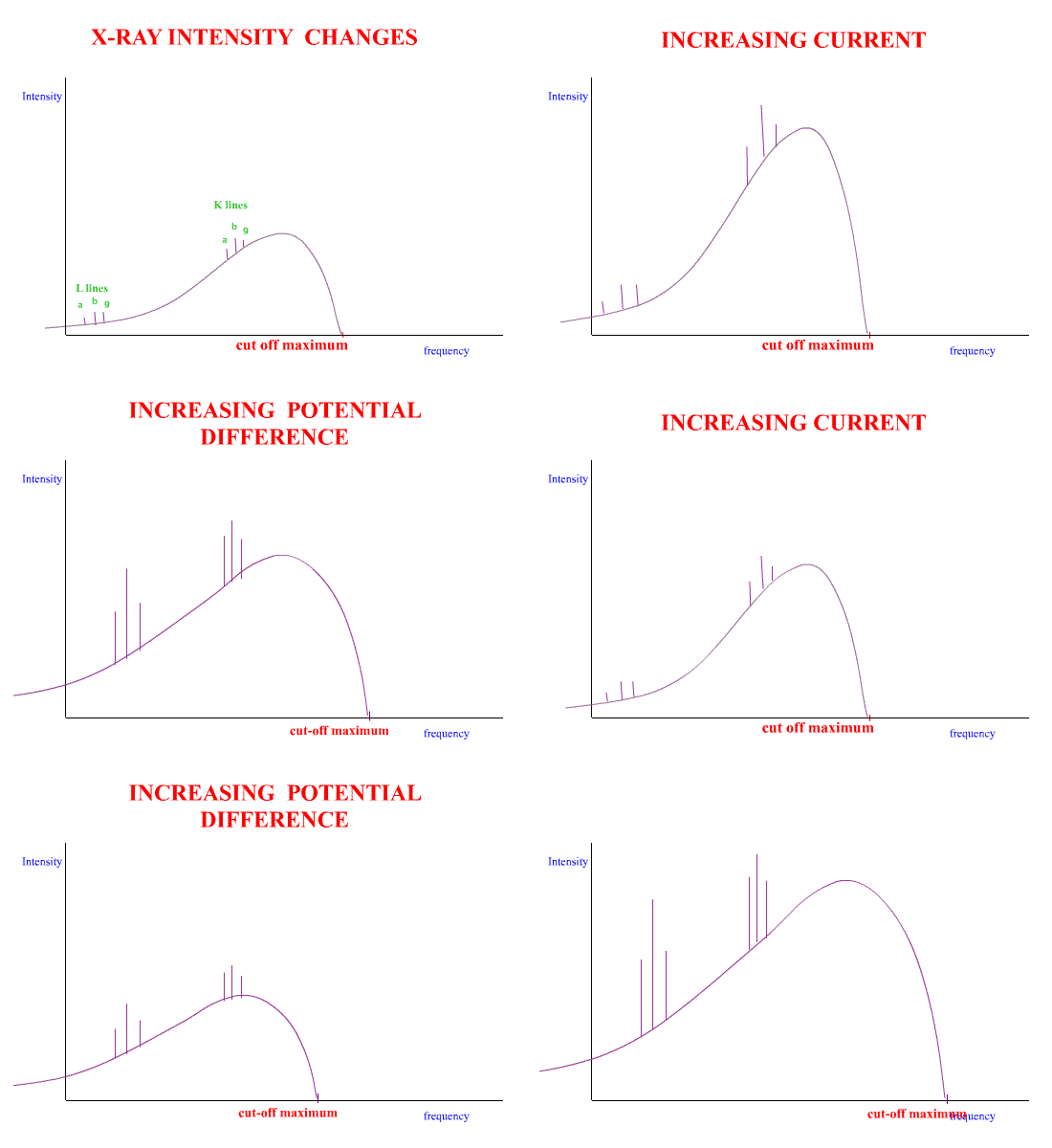
The series of groups of lines so formed show as spikes on the intensity/ frequency graph. They do not change position by varying the potential difference or current. Their traditional names are the K,L,M ... series corresponding to the innermost electron shell, then the next out and so on. The LEAST energetic of each shell is the a line, b next etc.
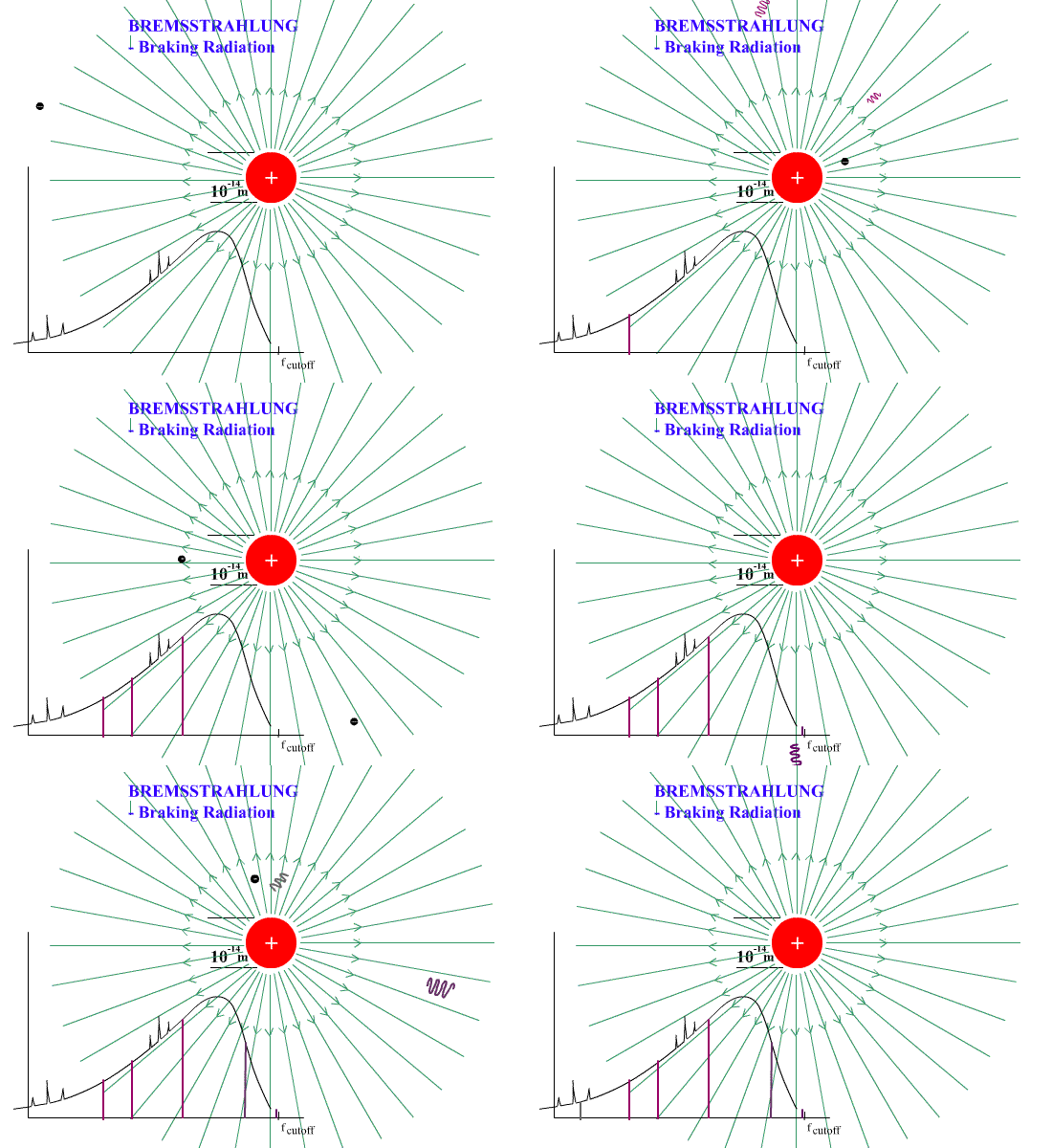
The energy translates remarkably simply for the incredibly rare cases where only one Bremsstrahlung photon is emitted -
Electrostatic potential energy changes to kinetic energy changes to photon production.
This allows the highest X Ray frequency to be calculated easily though not the intensity
qV = 1/2 mv2 = hfmax ( Einstein pointed out that this relation should hold)
Mostly, numerous photons are emitted through the process with the total photon energy adding to the electron potential energy.
The XRay output from a tube can be manipulated in two ways;
By varying the tube PD - this leads to both a movement of the highest frequency photons AND a change in overall photon intensity. Low PDs lead to low intensities and lower X Ray frequencies.
By changing the number of electrons crossing the tube - the tube current. this approach alters merely the intensity, not the frequency range.