INDUCTION topics
The word means "to bring about". In this sense we are "bringing about" a current from some other form of energy.
The process of inducing a current was first found by Michael Faraday ( 1831 ) who reasoned that since Oersted had shown electricity creates magnetism that magnetism should create electricity. ( This reversability is an example of a symmetry - very important in modern particle physics.)
After much trying, he showed that the key to generating electricity is RELATIVE CHANGE - motion and / or field variation.
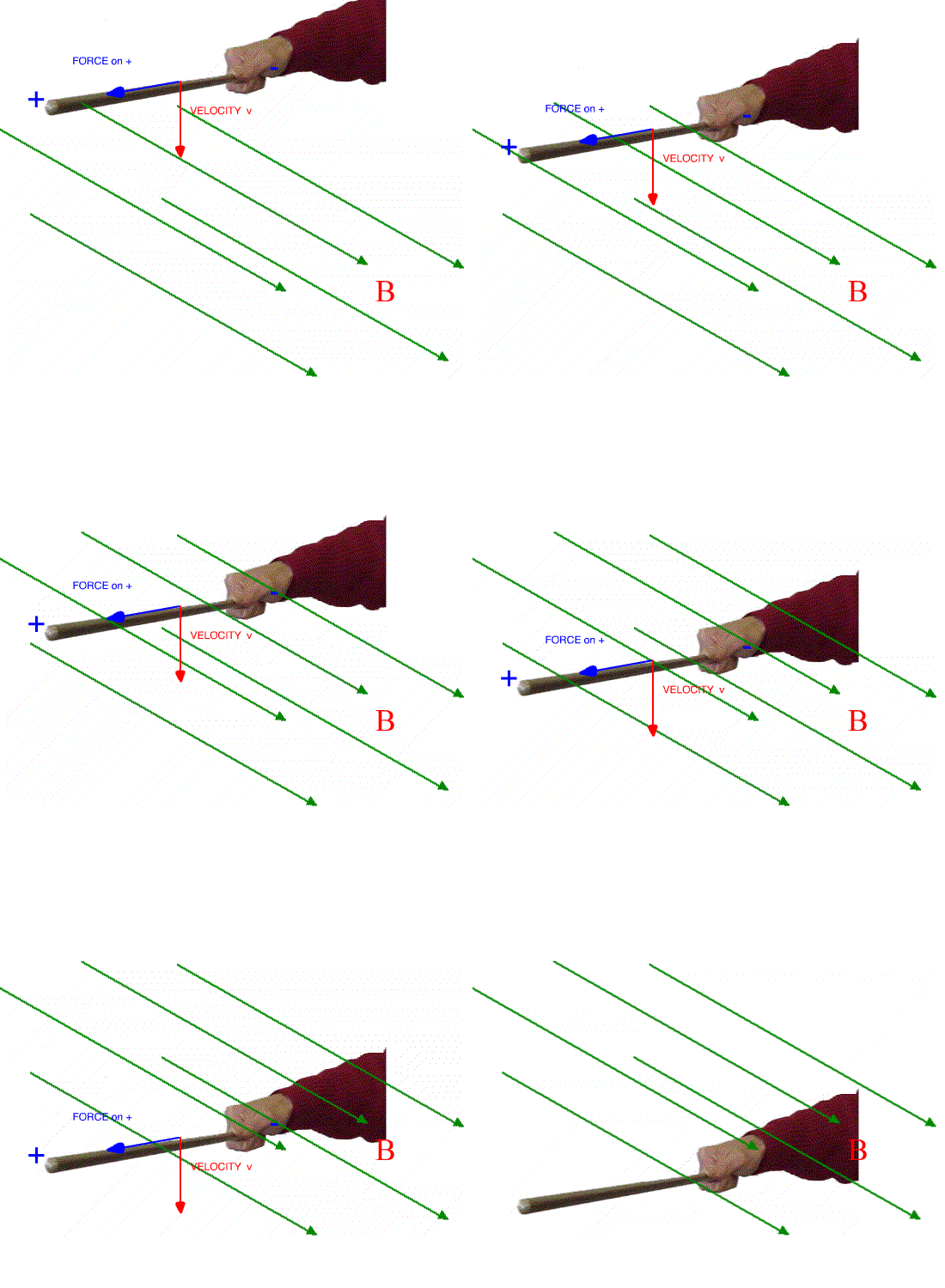
Connect the ends to a radio or something - and we will have a current WHILE THE CONDUCTOR IS BEING MOVED. The energy for the radio comes from the motion.
We calculate the generated voltage across the ends of the conductor - the "ELECTROMOTIVE FORCE, EMF, ε" by calculating the
Work Done = F x distance = qvBsinθ x length of conductor = qvlBsinθ
Well now this ain't so hard,
EMF ( voltage ) = Work Done / q = vlBsinθ
If we connect this to a resistance, start invoking Ohm's Law and away we go. EMF = IR
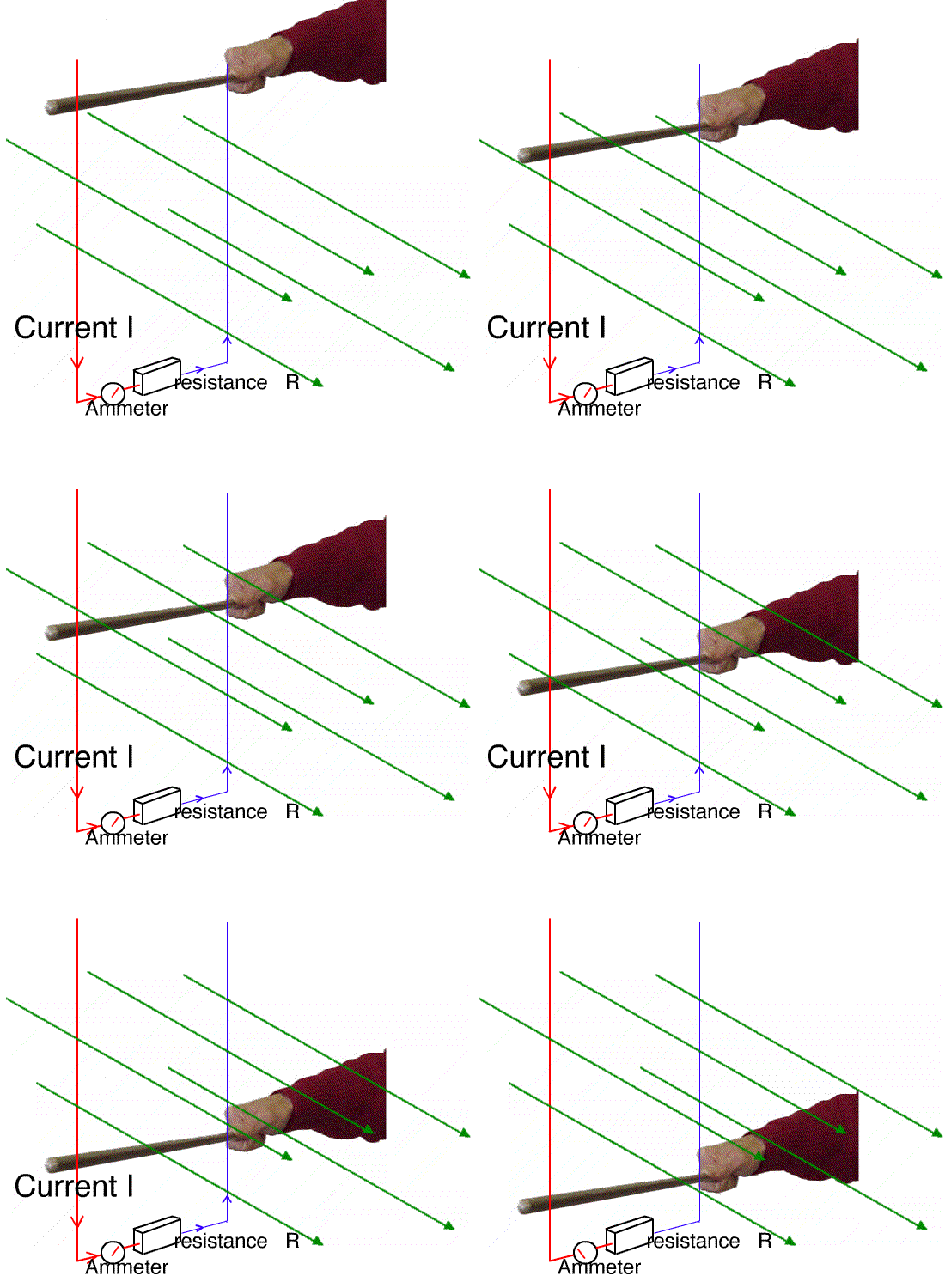
Now that is interesting; we have a current in our conductor! So we can use F = IlB on this current and good old RHScrew rule.
The Force on our induced current OPPOSES the motion, v, of the conductor !!! Ah, so the external mover must do work against this force - THAT is where the energy link comes in.
EXTENSION
Faraday started with this model but logically concluded that any change would do the trick. He introduced the MAGNETIC FLUX idea.
Φ = B.Area swept out by conductor ( Φ = Greek Phi for flux )
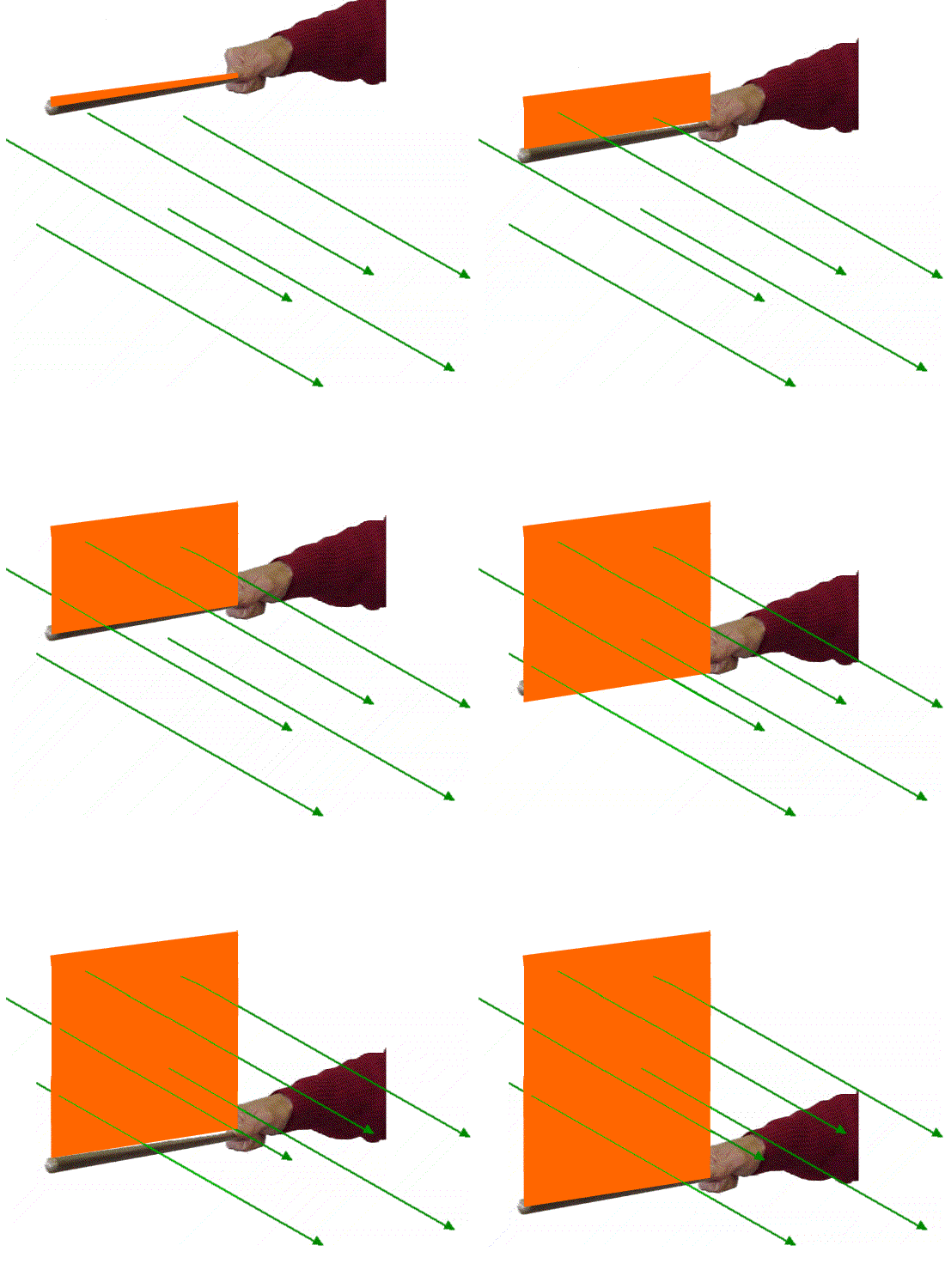
Now, he reasoned that EMF = vlB = ylB /Δt where y = distance the conductor moves in time Δt
BUT , but yl = area swept out = A in time Δt
SO EMF = BA / Δt = Δ Φ / Δt This is called Faraday's Law ( sometimes Neumann's Law) of Induction.
Why so important ? Because it allows B to change in time!!!!!! and induce a current.
This is the key explanation to many induced currents where no moving conductors are around, merely changing fields.
Transformers, eddy currents, Induction coils in cars - all work through this principle.